
Boogertman + Partners was proud to take part in the inaugural Pan-African Biennale, held across Nairobi from 7 to 11 September 2026, through two connected experiences: the opening of Unearthing the Archive, an exhibition from this year’s Ubunifu Student Programme at the National Museums of Kenya, and the opening of our Nairobi studio to the public as part of the Biennale’s Open Offices programme.
The Pan-African Biennale brought architects, designers, students, researchers, institutions and communities together in Nairobi around the theme Shifting the Center: From Fragility to Resilience. Curated by Omar Degan, the programme created a significant platform for conversations around African architectural authorship, knowledge, memory, resilience and the future of the continent’s built environment.
For Boogertman + Partners, these conversations had a strong connection to questions already being explored through Ubunifu, our student mentorship programme. This year’s collaboration with the National Museums of Kenya centred on archives, cultural memory, knowledge and visibility, conversations that the Biennale helped amplify and connect to a wider architectural audience.
Unearthing the Archive
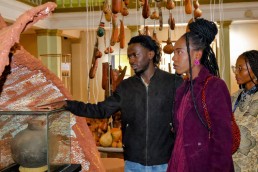
On 9 September, Boogertman + Partners, in collaboration with the National Museums of Kenya, opened Unearthing the Archive, bringing together work developed by nine architecture students from schools of architecture across Kenya during the 2026 edition of Ubunifu.
The 10-week programme began within the Museum’s cultural collections, where students were invited to look beyond the physical form of artefacts and into the wider worlds that produced them. Their investigations uncovered stories of migration and adaptation, systems of time and ritual, Indigenous craftsmanship and knowledge, relationships with land and water, cultural change, memory and shared human needs.
But an archive is shaped not only by what has been preserved. It is also shaped by what has been overlooked, what is remembered, and what continues to live through people, practice and place.
This led to the question at the heart of this year’s Ubunifu:

Who decides what is seen?
Over 10 weeks, the nine students followed that question in different directions. Through research, observation, drawing, conversation and experimentation, each began to uncover the histories and knowledge surrounding the objects they encountered and to consider what might become visible when we choose to look again.
Those individual investigations came together in “Unearthing the Archive” transforming the exhibition into an invitation to look beyond the object and consider the stories, knowledge and the lived worlds held around it.
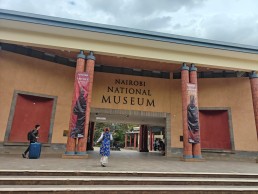
Unearthing the Archive will continue throughout September 2026 at Kenya Hall, National Museums of Kenya, giving visitors another opportunity to encounter the students’ work and perhaps leave with a question of their own.
Open Office: Inside the B+P Nairobi Studio
The following day, 10 September, the conversation moved from the Museum into the studio.
As part of the Pan-African Biennale’s Open Offices programme, Boogertman + Partners opened the doors of its Nairobi studio, inviting visitors into the everyday environment where ideas are discussed, tested, challenged and developed.
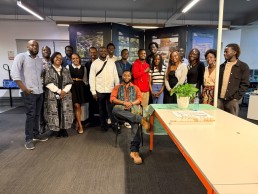
Throughout the day, the studio became a space for exchange. Visitors moved through project displays, works in progress and research material, met members of the B+P team, and joined conversations around architecture, practice and the changing contexts in which we design across the continent.
Ubunifu formed part of that experience too, but from a different perspective. While Unearthing the Archive at the National Museums of Kenya presented the students’ final propositions, the Open Office offered a behind-the-scenes view of the process, from initial encounters with the Museum’s collections through research, observation and experimentation to design development and the final exhibition.
Alongside Ubunifu, we featured a selection of Boogertman + Partners projects that speak to the Biennale’s theme, Shifting the Center: From Fragility to Resilience.
Among them were the Pakishu Women Empowerment Centre in Enoosaen, Narok County, Kenya, exploring community agency, cultural knowledge and local making; the New Sight Eye Centre in Ouesso, Republic of Congo, centred on access to healthcare and responsive, inclusive design; and the Wangari Muta Maathai House in Nairobi, Kenya, a living memorial shaped around environmental stewardship, memory and legacy.
Together, the projects explored architecture as a platform for social and economic transformation, healing and access, and environmental and cultural legacy, different expressions of resilience grounded in the people and places they serve.
Other inspiring projects and concepts on display included Boogertman + Partners’ winning, though ultimately unbuilt, proposal for Al Ahly Stadium in Cairo, and the innovative stadium concept developed for the Seychelles Football Association’s bid to host the 2025 FIFA Beach Soccer World Cup. Portable and demountable, the Seychelles concept extended the conversation into adaptability, exploring architecture as flexible and relocatable rather than inherently fixed and permanent.
A central display within the Open Office was dedicated to Ubunifu, connecting the studio experience back to Unearthing the Archive at the National Museums of Kenya. The students’ personal reflections and experiences formed an important part of their design responses and resonated strongly with visitors.
Boogertman + Partners, in collaboration with Boboth Studios, has documented this journey in a film exploring the processes, conversations and thinking behind this year’s Ubunifu programme and the projects that emerged from it. Watch this space.
We extend our thanks to The National Museum and their team of experts for the knowledge they impacted on us, the participating universities, students and mentors who made this year’s Ubunifu possible, including the Sandra Mbula and Kevin Mwangi from Cave Bureau, University of Nairobi, Jomo Kenyatta University of Agriculture and Technology, Kenyatta University and the Technical University of Mombasa. We’d like to also thank Omar Degan and the Pan-African Biennale team for creating a platform that brought practitioners, students, institutions and the public together in a wider conversation around the future of architecture on the continent.